
Sleepmaxxing is the trend of trying to improve sleep by stacking habits, devices, supplements, routines, and environmental changes. Some of the ideas are basic sleep hygiene with a new name. Others are expensive, unnecessary, or based on weak evidence.
The useful part of sleepmaxxing is the renewed attention on sleep. Most adults benefit from a consistent schedule, a dark and quiet room, regular daytime activity, and less late-night stimulation. The National Heart, Lung, and Blood Institute recommends many of these same habits.
The less useful part is the belief that better sleep requires a large stack of products or constant self-tracking. A simpler routine is often easier to maintain and less likely to create anxiety around sleep.
(Related: Healthy Evening Habits for Better Rest)
What Is Sleepmaxxing?
Sleepmaxxing is a social-media label for doing as much as possible to improve sleep quality. A typical routine might include blackout curtains, a cool bedroom, white noise, blue-light limits, sleep trackers, magnesium, mouth tape, weighted blankets, early dinners, breathing exercises, and carefully timed bedtimes.
Some of those habits are sensible. Others are highly individual. A bedroom that is dark, quiet, and comfortable is a basic sleep principle. A specific gadget, supplement, or wearable score is not a universal requirement.
That distinction matters because sleep is a biological process, not a performance contest. The goal is not to create the most complicated routine. It is to support a regular sleep-wake rhythm and reduce the things that repeatedly interfere with rest.
Why Sleepmaxxing Became Popular
Sleep has become a major wellness topic because people can see its connection with mood, focus, exercise recovery, appetite, and daily performance. Wearables have also made sleep feel measurable, giving users nightly scores for duration, stages, heart rate, and recovery.
At the same time, modern routines create obvious sleep barriers. Late-night scrolling, irregular work hours, caffeine, stress, and bright indoor light can all push bedtime later or make it harder to wind down.
Sleepmaxxing packages the solution as optimization. That can motivate people to improve habits, but it can also make normal night-to-night variation feel like a failure.
The Sleepmaxxing Habits That Make the Most Sense
A consistent sleep and wake time is one of the strongest foundations. The body responds to regular timing, especially when morning light exposure and daytime activity reinforce that rhythm.
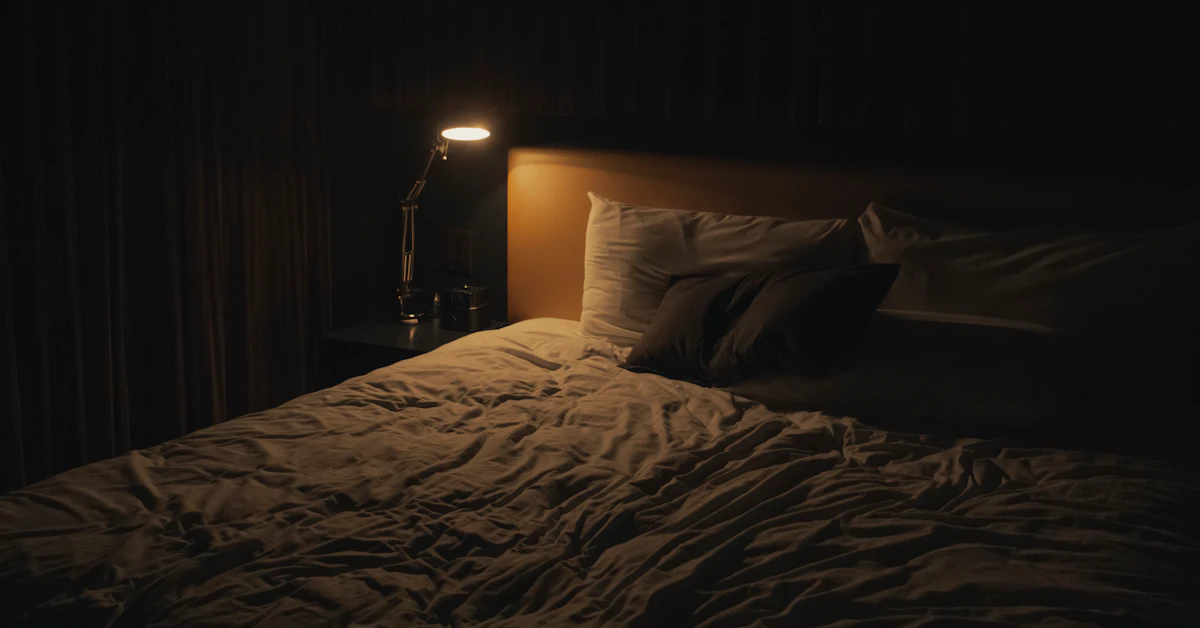
Room conditions matter too. A dark, quiet, and comfortably cool room can reduce avoidable disturbances. Blackout curtains, an eye mask, earplugs, or white noise may help if the environment is bright or noisy.
Another useful habit is reducing stimulating activity before bed. That does not require a complete digital detox, but it can mean dimmer light, fewer work messages, and less emotionally activating content during the final part of the evening.
(Read next: Digital Boundaries for Better Sleep)
Does Blue Light Need to Be Completely Avoided?
Light exposure in the evening can affect circadian timing, but the conversation around blue light is often oversimplified. Screens can interfere with sleep because of brightness, timing, and the content people engage with, not just because the light is “blue.”
Turning down brightness, using warmer display settings, and avoiding long stretches of stimulating content can be more practical than trying to eliminate every screen.
The bigger signal is behavior. If a phone keeps you awake for an extra hour, the lost hour may matter more than the exact wavelength of the display.
What About Sleep Trackers?
Wearables can be useful for spotting patterns. If your sleep time is consistently short or your schedule changes dramatically between weekdays and weekends, a tracker can make that visible.
But consumer devices estimate sleep stages rather than directly measuring them the way a sleep laboratory does. Nightly scores should not be treated as a diagnosis.
If checking a score makes you anxious, the tracker may be working against the goal. How you feel and function during the day still matters.
Supplements and Sleepmaxxing
Many sleepmaxxing routines include magnesium, melatonin, herbal products, or blended sleep formulas. These products are not interchangeable, and evidence varies by ingredient and by the person using it.
Melatonin can be useful for certain circadian timing problems, but it is not a universal sedative. Magnesium may help people who are deficient, while broad claims that it fixes sleep for everyone go beyond the evidence.
Supplements can also interact with medicines or be inappropriate during pregnancy or for certain health conditions. A product labeled “natural” still has biological effects.
Mouth Taping and Other Viral Sleep Hacks
Mouth taping is one of the more visible sleepmaxxing trends. Supporters claim it encourages nasal breathing, reduces dry mouth, and improves sleep. The evidence is limited, and it may be unsafe for people with nasal obstruction, sleep apnea, breathing disorders, or certain medical conditions.
Other hacks, such as extremely cold rooms, rigid meal cutoffs, or elaborate supplement stacks, may work for some people but are not core requirements for good sleep.
A useful rule is to ask whether a habit solves a real problem. If noise wakes you, earplugs may help. If late caffeine keeps you alert, adjust caffeine timing. If nothing is wrong, adding more interventions may not improve sleep.
A Simpler Sleepmaxxing Routine
Start with wake time. Pick a schedule you can maintain most days. Get daylight soon after waking when possible, and include regular movement during the day.
In the evening, reduce work and stimulation before bed. Keep the bedroom dark, quiet, and comfortable. Avoid large amounts of alcohol close to bedtime, and pay attention to when caffeine affects you.
If you are awake for long periods night after night, snore heavily, stop breathing during sleep, or feel excessively sleepy during the day, optimization hacks are not the right next step. Those symptoms deserve medical evaluation.
(Related: Daily Calm Practices for Busy Schedules)
Frequently Asked Questions
Is sleepmaxxing healthy?
It can be useful when it encourages consistent sleep timing, a better bedroom environment, and fewer late-night disruptions. It becomes less useful when it creates anxiety or relies on unproven hacks.
Do you need supplements to sleep better?
No. Many people can improve sleep with scheduling, light exposure, activity, and evening habits. Supplements are situation-specific rather than a requirement.
Are sleep trackers accurate?
They can estimate patterns and duration, but they are not the same as a clinical sleep study and should not be used to diagnose sleep disorders.
Does mouth taping improve sleep?
Evidence is limited. It may also be unsuitable for people with breathing problems, nasal blockage, or suspected sleep apnea.
What is the simplest sleepmaxxing habit?
A consistent wake time is a strong place to start because it helps anchor the daily sleep-wake rhythm.
Closing Lines
Sleepmaxxing is most useful when it brings attention back to boring basics: regular timing, a good sleep environment, daytime movement, sensible light exposure, and fewer late-night disruptions.
The more complicated the routine becomes, the easier it is to confuse optimization with health. Better sleep does not require winning a nightly score. It requires habits you can repeat without turning bedtime into another stressful task.